

Kyoto Travel Guide
Most travelers arrive in Kyoto with a checklist: temples, shrines, bamboo forests, and maybe a geisha sighting in Gion. And honestly, that’s understandable. Kyoto is legendary for a reason. But the real magic of the city often lives quietly in the corners most visitors walk past. This Kyoto travel guide is about slowing down, wandering deeper, and discovering the Kyoto that locals know by heart.
If you’re ready to explore hidden Kyoto, you’ll find that the city reveals itself not all at once, but gently — like steam rising from a cup of matcha on a rainy afternoon.
A Kyoto Travel Guide to Wandering Without a Map
The first lesson in any Kyoto travel guide should be this: don’t overplan. Kyoto rewards curiosity more than efficiency. Some of the best moments happen when you turn down a narrow stone alley just because it “looks interesting.”
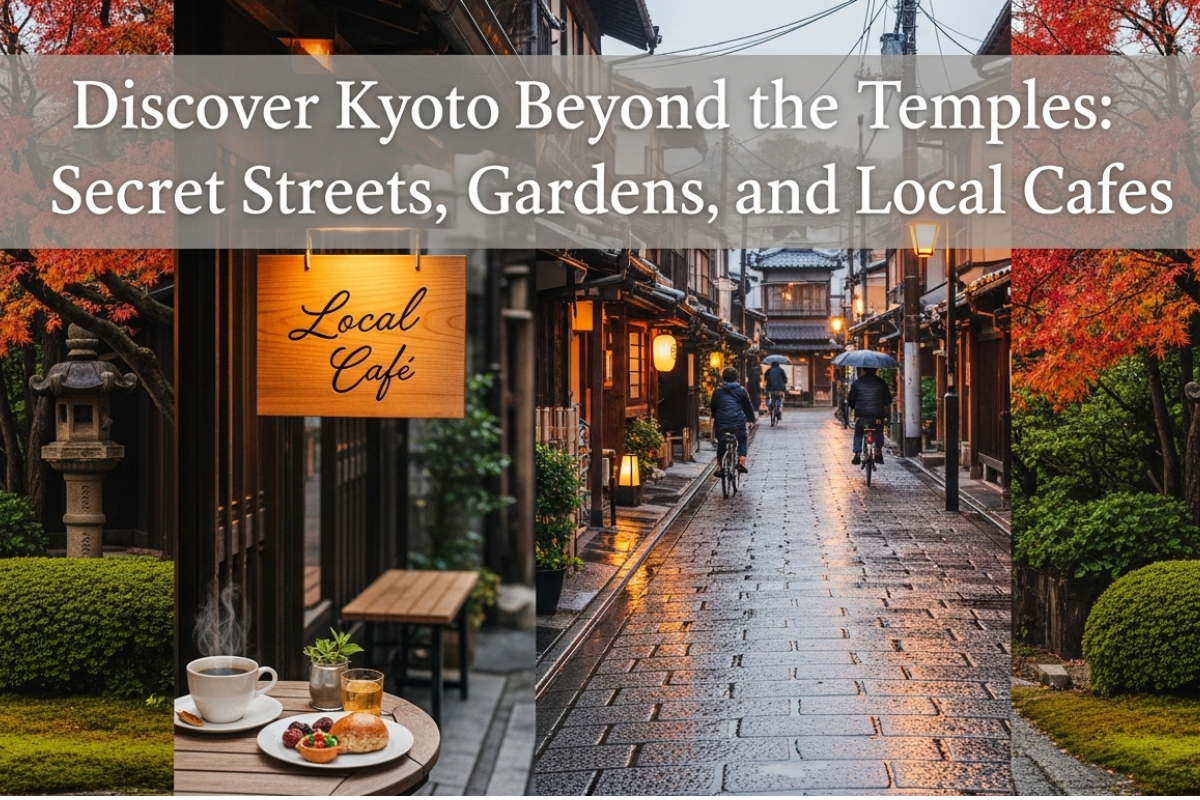
Early one morning, I found myself walking through the quiet backstreets near Higashiyama. No crowds, no tour buses — just the sound of wooden doors sliding open and the faint smell of grilled fish from a tiny kitchen. That’s when Kyoto feels most alive.
These unplanned walks often become the most meaningful things to do in Kyoto, even if they never appear in guidebooks.
Hidden Kyoto in Plain Sight
You don’t need to travel far to find Kyoto secret spots. Sometimes they exist just behind the busiest attractions.
Take the Shirakawa Canal area, for example. Just minutes from the crowds of Gion, this peaceful path lined with willow trees feels like stepping into a painting. A good Kyoto travel guide will always remind you to look one street beyond the obvious.
Another overlooked gem is the Kyoto Botanical Gardens. Locals picnic here, students read under trees, and the pace of the city slows down. It’s a perfect example of Kyoto local experiences that tourists often miss.
Kyoto Neighborhoods That Tell Stories
Every city has districts with personality, but Kyoto neighborhoods feel like chapters in a long novel.
Arashiyama may be famous for its bamboo grove, but wander past the main paths and you’ll find quiet residential streets, riverside walking trails, and small cafés where time seems to pause. Any thoughtful Kyoto travel guide will encourage you to stay longer than a quick photo stop.
Then there’s Nishijin, the historic weaving district. It doesn’t shout for attention. Instead, it hums quietly with tradition. Textile workshops, wooden townhouses, and family-run shops create some of the most authentic Kyoto cultural travel moments you can experience.
When you visit Kyoto Japan, these neighborhoods remind you that the city isn’t a museum — it’s a living, breathing place.
Gardens Where Time Slows Down
Kyoto’s temples are famous, but its gardens are unforgettable. One of my favorite discoveries while following a Kyoto travel guide was Murin-an Garden. It’s not as famous as others, which makes it perfect. Sitting there, watching koi glide through the pond, you start to understand the Japanese concept of stillness.
Another peaceful escape is Shosei-en Garden near Kyoto Station. Travelers rushing to trains rarely stop here, which is exactly why you should. These quiet green spaces are essential things to do in Kyoto if you want balance between sightseeing and reflection.
This is the softer side of hidden Kyoto, where silence becomes part of the experience.
Small Cafes and Slow Afternoons
No Kyoto travel guide is complete without coffee — or matcha. Kyoto’s café culture blends tradition and creativity in surprising ways. You’ll find espresso served inside 100-year-old wooden buildings and desserts that look like edible art.
In the Okazaki area, small independent cafés offer some of the best Kyoto local experiences you can have. Baristas remember regular customers, jazz music plays softly, and conversations unfold slowly. Sometimes the best things to do in Kyoto involve simply sitting still.
Kyoto After Sunset
Many travelers don’t realize how peaceful Kyoto becomes at night. A well-planned Kyoto travel guide should always include evening walks.
Pontocho Alley glows with lantern light, and the Kamogawa River becomes a quiet gathering place for locals. Couples sit along the riverbanks, musicians play softly, and the city exhales after a busy day.
Exploring Kyoto secret spots at night feels different — calmer, more personal. You start to notice small details: the rhythm of footsteps on stone streets, the reflection of lights on water, the distant ringing of a temple bell.
Moments like these define Kyoto cultural travel more than any landmark.
Seasonal Magic in Kyoto
If you truly want to visit Kyoto Japan, timing matters. Spring cherry blossoms transform the city into something almost unreal. Autumn paints the temples and Kyoto neighborhoods in deep reds and golds. Even winter has a quiet beauty, with occasional snow resting on wooden rooftops.
Every season reveals a new layer of hidden Kyoto, which is why many travelers return again and again. A thoughtful Kyoto travel guide doesn’t just tell you where to go — it helps you understand when to go.
Kyoto isn’t a one-time destination. It’s a place you build a relationship with over time.
Why Kyoto Feels Different
There’s something difficult to explain about Kyoto. Maybe it’s the balance between movement and stillness. Maybe it’s the way tradition and daily life exist side by side.
Following a Kyoto travel guide helps you see the landmarks, but slowing down helps you understand the city.
You notice a shop owner bowing to a customer. The sound of bicycle tires on narrow streets. The smell of incense drifting from a doorway. These small moments become the memories you carry home.
That’s the heart of Kyoto local experiences — not attractions, but atmosphere.
Final Thoughts
The best trips aren’t always about seeing more — sometimes they’re about noticing more. This Kyoto travel guide encourages you to step beyond the famous temples and discover the quieter rhythm of the city.
From peaceful gardens and historic Kyoto neighborhoods to cafés tucked into alleyways and unexpected Kyoto secret spots, the city offers endless ways to connect with its culture. Whether you’re searching for meaningful things to do in Kyoto or planning your first journey to visit Kyoto Japan, remember that Kyoto rewards patience and curiosity.
If you’re ready to turn inspiration into reality, platforms like Expedia can help you plan transportation, accommodations, and experiences while keeping your journey flexible enough to discover hidden Kyoto along the way. With the right balance of planning and spontaneity, your Kyoto travel guide becomes more than an itinerary — it becomes a story you’ll keep telling long after you return home.
For more inspiration on meaningful travel experiences, cultural city guides, and tips for exploring destinations like a local, visit Nextripvibe.
About the Author